

Leadership vs Management: Understanding Key Differences For Organizational
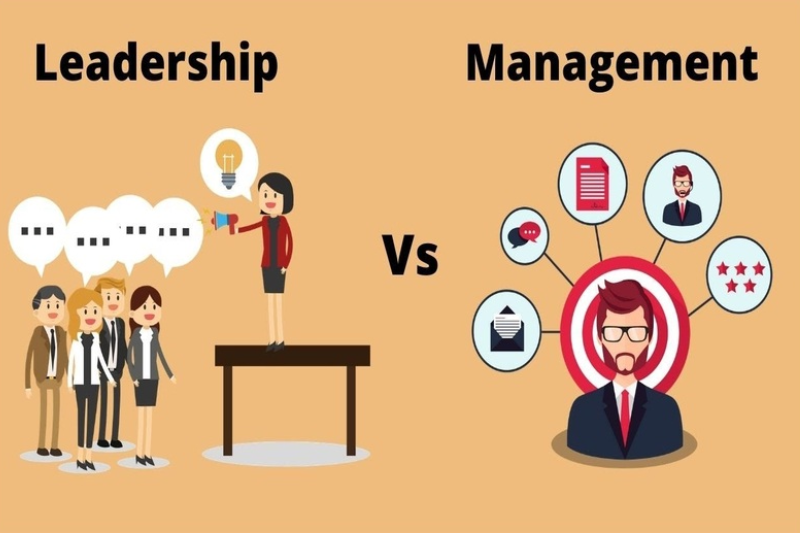
The role of differentiating leadership and management in the modern business world is more than ever before. Although the terms are used interchangeably, they denote extremely different strategies of leading organizations towards success. A leader is a person who knows the way, goes the way and shows the way as John C. Maxwell aptly puts it. This is a paramount understanding of what distinguishes between real leadership and the conventional management practice.
The connection between leadership and management is not that of antagonism but rather that of complement which when effectively balanced the whole force can bring winning momentum to an organization. This paper examines the differences between the two concepts, their distinguishing features, and the reasons why the contemporary organizations require professionals who are able to integrate the two skills smoothly.
What is Leadership?
The main concept of leadership is to motivate a vision and affect people with a common good. Leaders are visionaries that look beyond the immediate horizon and they see opportunity and set paths that others may not see. They are the only ones who have the capability to bring this vision down to the level of their teams and establish a deeper emotional bond with their teams beyond the scope of their jobs.
Fundamental Leadership Personality Traits
Vision Creation and Communication: Good leaders do not merely fantasize; when they do it, they develop their fantasies in convincing ways that persuade other people to join them in the ride. They give images of what could happen in the future that would lead to action and devotion.
Motivation and change management: Leaders know that change is inevitable and growth cannot be done without change. They encourage the teams to welcome change instead of being afraid of it, creating an atmosphere in which innovation succeeds and creativity prevails.
Relationship Building: Leader-ship is all about people. Great leaders take time to establish and develop relationships since they know that trust and relation are the bases of a successful team. They exhibit emotional intelligence, changing their strategy to suit personal and group needs.
Innovation Catalyst: Leaders disrupt the established norms and get their staff members to think outside the box and look at new opportunities. They provide safe grounds in which to experiment and the failure itself is treated as a learning experience and not a career failure.
Understanding Management: Structure, Efficiency, and Execution
Although leadership gives direction and inspiration, management makes sure that the organizations operate in the daily basis. Management refers to the organization and planning of resources and the control of resources in order to reach precise goals in an effective manner. According to Stephen Covey, efficiency in climbing the ladder of success is management, and leadership is whether the ladder is resting against the correct wall.
Management Functions
Planning and Organization: Managers are good in developing systematic ways of doing things and ensuring that they achieve their goals. They also divide big targets into small parts and set definite schedules and tasks.
Resource Allocation: Proper management demands the ideal allocation of human, money, and material resources. Managers have to strategize on how to invest their time, money and energies so that they get maximum returns.
Performance Monitoring: The managers set metrics and key performance indicators to monitor the progress. They interpret data and determine trends as well as make amendments to ensure that projects are maintained on time and teams remain prolific.
Risk Mitigation and Consistency: The managers provide consistency in the operation of the organization through the developed processes and procedures that help to identify and reduce possible risks that may lead a target organization astray.
The Critical Synergy
The most successful organizations have realized that leadership and management are not rivalry forces but rather complementary skills. Leadership establishes the course whereas management implements the same. This combination forms a strong powerhouse of sustainable success.
Visionary thinking and operational discipline have the ability to allow organizations to both aim high and be stable enough to experience long term growth. The thing is to know when to lead and when to manage and change the approach depending on the situation requirements and the circumstances of the organization.
Management and Administration
Management and administration of an office will be a practical application of the principles of management to the day to day running of organizations. This means that there will be coordination of activities, optimization of workflow, and administrative functions should be aligned to the overall organizational objectives.
Four keys in office management
Planning: Development of detailed plans regarding the attainment of certain goals and objectives within a stipulated period of time.
Organizing: This organizes the resources and skills of the employees to achieve their optimum productivity and efficiency.
Leading: Leadership attributes are used in setting and communicating goals to teams.
Controlling: This involves keeping track of operations to make sure that all the functions are carried out in a proper manner and to the standards of the organization.
Good Managerial Qualities: Leadership vs. Management
Leadership and management are best displayed in the best managers. They know that, as the expression goes, every good manager is a part leader; and that every good leader is a part manager.
Key Managerial Qualities
Devotion to Lifelong Learning: Extraordinary managers are also receptive to new ideas and concepts. They recognize gaps in knowledge and willingly go out to help fill them, and this represents the growth mindset that they would like to see in their teams.
Empathetic Communication: Excellent managers create a culture of open communication which is founded on empathy. They have a productive conversation, embrace discussion and rectify communication problems.
Talent Development: Effective managers instead of merely telling the workforce what to do they invest in talent development of their staff. He or she evaluates performance weaknesses and strengths, troubleshoots the needs of employees and discovers improved ways when fellow team members falter.
Leading by Example: The most esteemed managers are the ones who set good examples of what they want accomplished and how they want others to work. They have good people skills and they know that people do not want to hear, but to see.
Also read this: How Digital Tools Are Transforming Teacher Training Worldwide
Leadership and Management Integration to Success
Differentiating between leadership and management is not important as much as merging both sets of skills. It is in the nurturing of professionals who are able to inspire vision in making sure that operations are at a high level, who are able to inspire change without compromising stability, and who are able to dream big and implement it to perfection.
To become a leader or to organize teams, aim at building both operational and visionary skills. You need to combine both your creative approach to thinking and a keen eye to detail, strategic outlook with practical implementation, and inspirational style of communication with practical problem-solving. This broad perspective will put you and your organization on the path of long-term success in an even more complicated business environment.